Slow-Roasted Lamb Leg Recipes for Fall-Off-the-Bone Goodness
If you’re looking to prepare a truly spectacular centerpiece for a special occasion, a holiday feast, or a memorable Sunday dinner, a roasted leg of lamb is the answer.
While it might seem like an intimidating cut of meat, I’m here to show you that roasting a whole leg of lamb is surprisingly straightforward and results in a meal that is unbelievably delicious.
This recipe is all about classic, time-honored flavors that are the perfect complement to the rich taste of lamb.
We’re going to make a simple but incredibly fragrant paste of fresh garlic, rosemary, thyme, and lemon.
We’ll rub this all over the lamb and then roast it slowly until the outside is beautifully browned and crusted with herbs, and the inside is perfectly pink, tender, and juicy.
This is a show-stopping meal that is built on simple techniques. Let’s get our roasting pans ready and create a truly unforgettable dinner.
Quick Recipe Snapshot
Here’s a quick look at the timeline for this classic and impressive roast.
| Prep time | Cook time | Total time | Yield | Skill level | Spice level |
|---|---|---|---|---|---|
| 20 minutes | 1.5 – 2 hours | ~2 hours (+ resting) | 8-10 servings | Easy | Mild |
Ingredients
This classic roast uses a simple but powerful combination of fresh aromatics to let the flavor of the lamb shine.
For the Lamb Leg Roast:
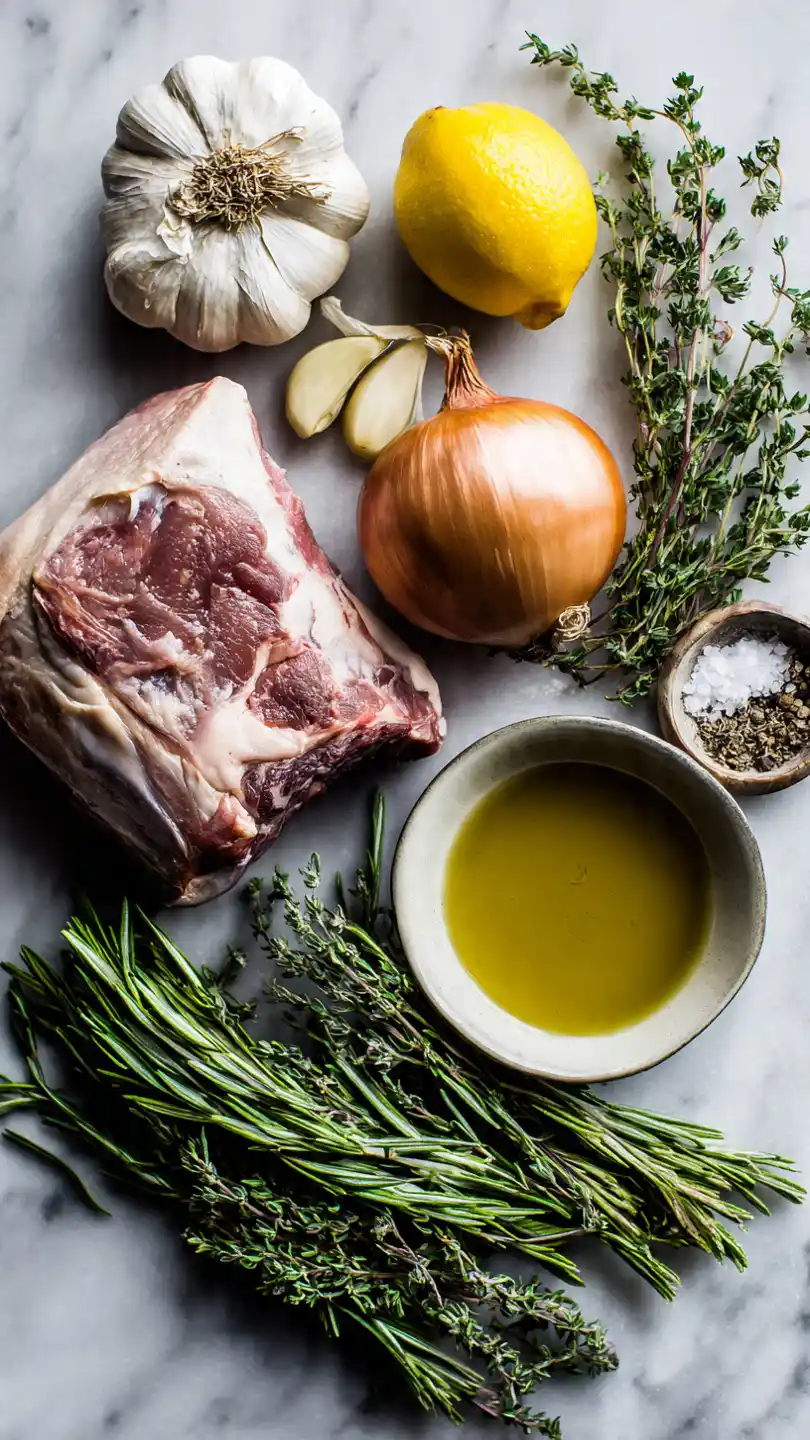
- Bone-in Leg of Lamb: One 5-7 pound roast. A bone-in roast provides more flavor and makes for a more dramatic presentation.
- 4-5 servings: 3-4 lb roast
- 8-10 servings: 5-7 lb roast
- Garlic: 1 whole head.
- Fresh Rosemary: ¼ cup, leaves stripped from stems and chopped.
- Fresh Thyme: 2 tbsp, leaves stripped from stems.
- Lemon: 1, zested and juiced.
- Olive Oil: ¼ cup.
- Coarse Salt: 1.5 tbsp.
- Coarsely Ground Black Pepper: 1.5 tbsp.
- Optional for the pan: 1 large onion, quartered, and 1 cup of beef or chicken broth.
The Flavor Architects A Look at the Ingredients
- Garlic: We’ll use garlic in two ways: slivers inserted directly into the meat to perfume it from the inside out, and minced in the rub to create an intensely aromatic and savory crust.
- Rosemary & Thyme: This is the quintessential herb pairing for lamb. Rosemary’s bold, pine-like fragrance and thyme’s earthy, slightly minty notes are the perfect complement to the rich, distinctive flavor of the meat.
- Lemon Zest: This is a secret weapon in the rub. The oils in the zest provide a bright, fragrant, and floral citrus note that cuts through the richness of the lamb without adding too much sourness.
- Coarse Salt & Pepper: A generous coating of coarse salt and pepper is about more than just seasoning; it helps to draw out moisture from the surface of the lamb, which is essential for creating a beautifully browned and delicious crust.
Essential Tools
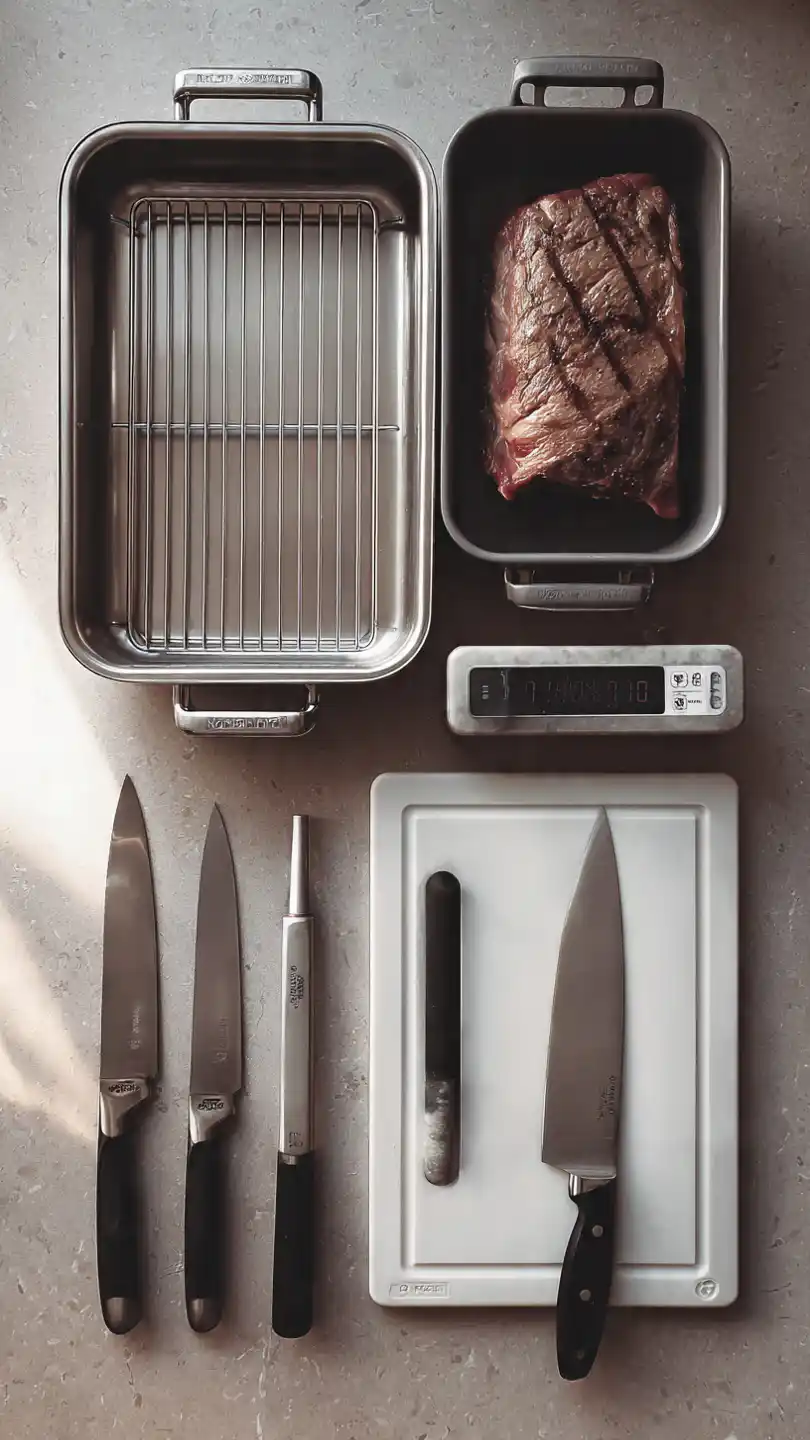
A few key tools are important for achieving a perfectly cooked roast.
- Large roasting pan with a rack
- Instant-read meat thermometer (this is the most important tool for this recipe)
- Mortar and pestle or a small food processor (optional)
- Sharp paring knife
- Cutting board with a juice groove
- Sharp carving knife
Cooking Instructions
This impressive roast is surprisingly straightforward, relying on a simple, flavorful rub and careful temperature monitoring for perfect results.
Step 1: Prepare the Lamb and Aromatic Rub
First, take your leg of lamb out of the refrigerator and let it sit at room temperature for at least 1-2 hours.
This is an important step that helps the large roast cook much more evenly. While it rests, prepare your aromatics. Peel about 8-10 cloves of garlic and slice them into thin slivers. Use a sharp paring knife to make small, deep incisions all over the surface of the lamb and insert a garlic sliver into each one.
In a small bowl (or with a mortar and pestle), combine the chopped rosemary, thyme, lemon zest, remaining minced garlic, coarse salt, and black pepper. Pour in the olive oil and mix everything together to form a thick, fragrant paste.
Step 2: Season the Roast
Pat the entire surface of the lamb completely dry with paper towels. A dry surface is essential for developing a beautiful, golden-brown crust in the oven.
Using your hands, massage the garlic and herb paste all over the entire surface of the leg of lamb, making sure to coat it evenly.
If you are using an onion, place the quartered pieces in the bottom of your roasting pan and place the roasting rack over them. Place the seasoned lamb on the rack, fat-side up.
Step 3: The Initial High-Heat Roast
Preheat your oven to 425°F (220°C). Roasting the lamb at a high temperature for a short period at the beginning is the key to creating a delicious, well-browned exterior.
Place the roasting pan in the preheated oven and roast for 20 minutes. After 20 minutes, the herbs and garlic should be incredibly fragrant and the surface of the lamb will have started to brown.
Step 4: The Low and Slow Finish and the Crucial Rest
After the initial 20 minutes, reduce the oven temperature to 325°F (165°C). Pour the optional cup of broth into the bottom of the roasting pan. Continue to roast for approximately 15-20 minutes per pound.
The most reliable way to check for doneness is with an instant-read meat thermometer inserted into the thickest part of the meat, avoiding the bone. For a perfect medium-rare, pull the roast from the oven when the temperature reaches 130-135°F.
Immediately transfer the roast to a large cutting board, tent it loosely with foil, and let it rest for at least 20-30 minutes before carving. This is a non-negotiable step that ensures a juicy, tender result. After resting, carve the meat against the grain and serve.
Recipe Variations
This classic roasting method is a perfect base for different flavor profiles.
- Make it Spicy: Add 1-2 teaspoons of red pepper flakes or a tablespoon of harissa paste to the garlic and herb rub for a fiery kick.
- Mustard Crusted: In addition to the herb rub, you can coat the entire leg of lamb in a thin layer of Dijon mustard before roasting. This will add a wonderful tangy flavor and help to create an even better crust.
- Add Root Vegetables: You can turn this into a one-pan meal by tossing chunks of potato and carrots with olive oil and herbs and adding them to the roasting pan around the lamb for the last hour of cooking.
Serving Suggestions
A classic leg of lamb pairs wonderfully with traditional, comforting side dishes.
- Pan Gravy: The leftover drippings, broth, and roasted onions in the pan are the perfect base for a rich gravy. Simply strain the liquid, skim the fat, and thicken it on the stovetop with a cornstarch slurry.
- Mint Sauce: A traditional and highly recommended accompaniment. A simple sauce of finely chopped fresh mint, vinegar, sugar, and a little hot water provides a bright, acidic contrast that cuts through the richness of the lamb.
- Roasted Potatoes: Crispy, golden-brown roasted potatoes are the perfect starchy side. You can cook them right in the pan with the lamb.
- Green Vegetables: Serve with a side of simple steamed asparagus, green beans, or roasted Brussels sprouts.
Storage & Reheating Tips
Leftover roast lamb is a treat and makes for incredible sandwiches the next day.
- Storage: Let the lamb cool completely. Store leftover sliced lamb in an airtight container in the refrigerator for up to 4 days. Store any leftover gravy separately.
- Reheating: Reheating roast lamb without drying it out can be tricky. The best method is to place the slices in an oven-safe dish, add a splash of beef broth or leftover gravy, cover with foil, and warm gently in a 300°F (150°C) oven for 10-15 minutes.
Common Mistakes & Fixes
| Mistake | Fix |
|---|---|
| My lamb is tough and overcooked. | You cooked it for too long or at too high a temperature. Lamb leg is best served medium-rare or medium. An instant-read meat thermometer is the only foolproof way to know exactly when to pull the roast from the oven. |
| The herb crust burned. | Your initial oven temperature might have been too high, or the herbs were too exposed. If you notice the crust getting too dark during the low-temperature roasting phase, you can loosely tent the top of the roast with a piece of aluminum foil. |
| All the juices ran out when I carved it. | You did not let the roast rest long enough. The 20-30 minute resting period is an essential step. It allows the muscle fibers to relax and reabsorb all their delicious juices, ensuring the meat is moist and tender. |
| The inside of the roast is bland. | Did you stud the lamb with the garlic slivers? This is an important step that helps to flavor the meat from the inside. Also, be very generous with the salt in your rub, as it’s a large piece of meat to season. |
FAQs
Should I choose a bone-in or boneless leg of lamb?
While a boneless leg of lamb is easier to carve, a bone-in roast is highly recommended for the best flavor.
The bone insulates the meat as it cooks, helping it to cook more evenly, and it adds a huge amount of rich flavor to the final roast and the pan drippings.
How do I carve a bone-in leg of lamb?
Let the roast rest first. Hold the bone firmly with a clean kitchen towel. Make long, smooth slices perpendicular to the bone, cutting down until your knife hits the bone.
Then, run your knife horizontally along the top of the bone to release all the slices.
Why is it important to let the lamb sit at room temperature before roasting?
A large roast like a leg of lamb is very dense. If you put it in the oven straight from the cold refrigerator, the outside will cook much faster than the inside, leading to an unevenly cooked roast.
Letting it sit on the counter for an hour or two allows the meat to cook much more evenly.
Enjoy Your Show-Stopping Roast Dinner!
You are now ready to tackle a roasted leg of lamb and create a truly memorable meal.
This recipe proves that you don’t need complicated techniques to produce a tender, juicy, and incredibly flavorful centerpiece for your table.
I hope you and your guests love every single slice!