How to Make Addictive & Chewy Tteokbokki at Home
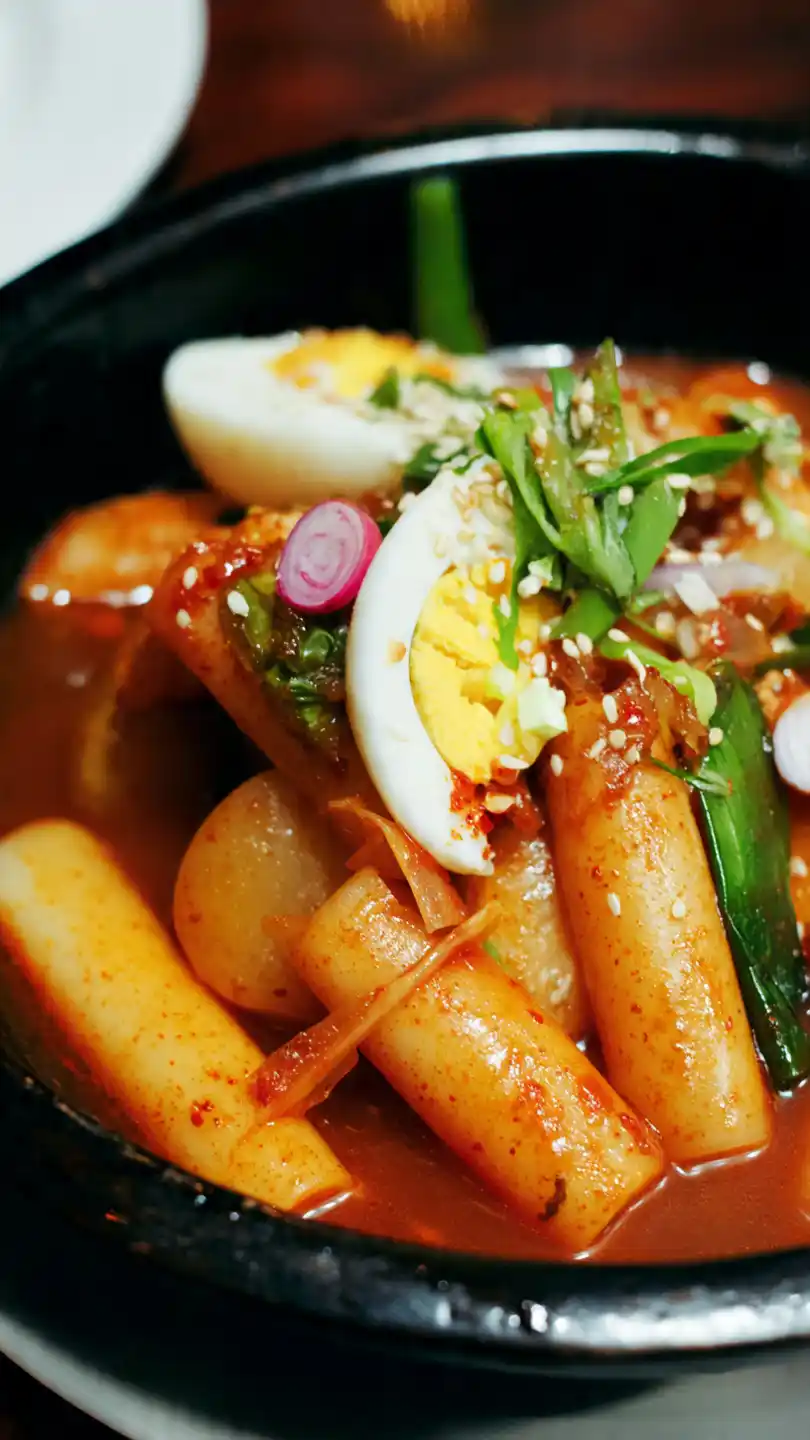
If you’ve ever explored the vibrant world of Korean street food, you’ve undoubtedly encountered tteokbokki or Korean rice cake. These iconic, cylindrical rice cakes, swimming in a fiery, glossy red sauce, are a national obsession for a reason.
Today, we’re bringing that irresistible flavor right into your own kitchen with a classic Korean rice cake recipe.
This dish is a masterclass in Korean comfort food. It’s all about the delightful, chewy texture of the rice cakes and a sauce that hits every single flavor note: spicy, sweet, and deeply savory.
We’ll build our sauce with a base of gochujang (Korean chili paste) and gochugaru (Korean chili flakes), then simmer the rice cakes until they are perfectly soft and have soaked up all of that incredible flavor.
This is a fast, fun, and deeply satisfying dish that’s perfect for a quick dinner or a late-night snack. Let’s get that sauce bubbling and create a truly authentic taste of Korea.
Quick Recipe Snapshot
Here’s a quick look at the timeline for this incredibly popular and easy dish.
| Prep time | Cook time | Total time | Yield | Skill level | Spice level |
|---|---|---|---|---|---|
| 10 minutes (plus soaking time) | 15-20 minutes | 30 minutes (+ soaking) | 2-3 servings | Easy | Spicy |
Ingredients
This classic recipe uses a handful of essential Korean pantry staples to create its signature flavor.
- Korean Rice Cakes (Tteok) – You’ll need the cylinder-shaped rice cakes, called garae-tteok. They can be found fresh or frozen in the refrigerated or freezer section of any Korean or large Asian market.
- 1-2 servings: 1 lb
- 2-3 servings: 1.5 lbs
- For the Anchovy Broth (Optional but Recommended):
- Water: 4 cups
- Dried Anchovies: 7-8 large, guts removed.
- Dried Kelp (Dashima): 1 (6×4 inch) piece.
- For the Tteokbokki Sauce:
- Gochujang (Korean Chili Paste): 2-4 tbsp. This is the heart of the sauce.
- Gochugaru (Korean Chili Flakes): 1-2 tbsp, for color and a cleaner heat.
- Soy Sauce: 1 tbsp.
- Sugar or Corn Syrup: 1-2 tbsp, for sweetness and shine.
- Add-ins:
- Fish Cakes (Eomuk): 2-3 sheets, cut into triangles or strips.
- Scallions: 3, cut into 2-inch pieces.
- Hard-boiled Eggs (optional): 2, for serving.
The Flavor Architects A Look at the Ingredients
- Gochujang (Korean Chili Paste): This is the soul of the sauce, providing a complex, savory, sweet, and fermented heat that is unmistakably Korean.
- Gochugaru (Korean Chili Flakes): These chili flakes add a vibrant red color and a layer of smoky, fruity heat that is less sweet and more direct than gochujang.
- Dried Anchovy & Kelp Broth: While you can use water, making a quick broth with these two ingredients provides a deep, savory, and umami-rich foundation that elevates the entire dish.
- Fish Cakes (Eomuk): A classic street-food pairing, these savory, slightly spongy cakes absorb the spicy sauce and add a wonderful contrasting texture.
- Sugar or Corn Syrup: This is essential for balancing the salty and spicy elements, and it gives the final sauce its signature glossy sheen.
Essential Tools
This is a simple one-pan dish that requires minimal equipment.
- Large, wide pan or skillet
- Small pot for broth (if using)
- Strainer
- Wooden spoon or spatula
Cooking Instructions
This popular street food is surprisingly quick and easy to make at home. The process is all about building a flavorful sauce and simmering the rice cakes to perfection.
Step 1: Prepare the Rice Cakes and Broth
First, you need to prepare your rice cakes. If you are using refrigerated or frozen rice cakes, they will be hard. You must soak them in a bowl of warm water for at least 15-20 minutes to soften them up before cooking.
While they soak, you can make the simple broth. In a medium pot, combine 4 cups of water with the dried anchovies and the piece of dried kelp. Bring it to a boil and let it simmer for about 10 minutes.
After 10 minutes, discard the anchovies and kelp. This quick process creates a beautifully savory broth that adds much more depth than plain water.
Step 2: Create the Fiery Tteokbokki Sauce
In your large, wide skillet, combine 3 cups of your prepared anchovy broth (or water) with the gochujang, gochugaru, soy sauce, and sugar.
Use a whisk or a spoon to stir everything together over medium-high heat until the gochujang and sugar are completely dissolved and the sauce is a uniform, vibrant red color. Bring this sauce mixture to a boil.
This is the flavorful bath where your rice cakes will cook and transform.
Step 3: Simmer the Rice Cakes and Fish Cakes
Once the sauce is boiling, drain your softened rice cakes from their soaking water and add them to the skillet.
Let them simmer in the boiling sauce, stirring occasionally to prevent them from sticking to the bottom of the pan. Cook for about 5-7 minutes.
You’ll notice the sauce will start to thicken as the starch from the rice cakes releases. After a few minutes, add the cut fish cakes to the pan.
Step 4: Finish and Serve
Continue to simmer everything together for another 5-8 minutes, stirring frequently. The rice cakes should be very soft and chewy, and the sauce should be thick, glossy, and reduced enough to beautifully coat everything in the pan.
During the last minute of cooking, stir in the chopped scallions. To serve, spoon the hot tteokbokki and sauce into a bowl. If you’re using them, add one or two hard-boiled eggs on top. Serve immediately while it’s piping hot.
Recipe Variations
While classic tteokbokki is fantastic, it’s also a great base for many delicious variations.
- Make it Cheesy (Cheese Tteokbokki): A hugely popular version. In the last minute of cooking, lay a few slices of American cheese or a generous handful of shredded mozzarella over the top, cover the pan, and let it melt into a gooey, cheesy blanket.
- Add Ramen (Rabokki): This stands for Ramen + Tteokbokki. Simply add a block of instant ramen noodles (without the seasoning packet) to the skillet during the last 3-4 minutes of cooking and stir until the noodles are cooked through.
- Royal Court Tteokbokki (Gungjung Tteokbokki): For a non-spicy, savory version, use a soy sauce-based marinade with sesame oil, garlic, and a little sugar instead of the red chili sauce.
Serving Suggestions
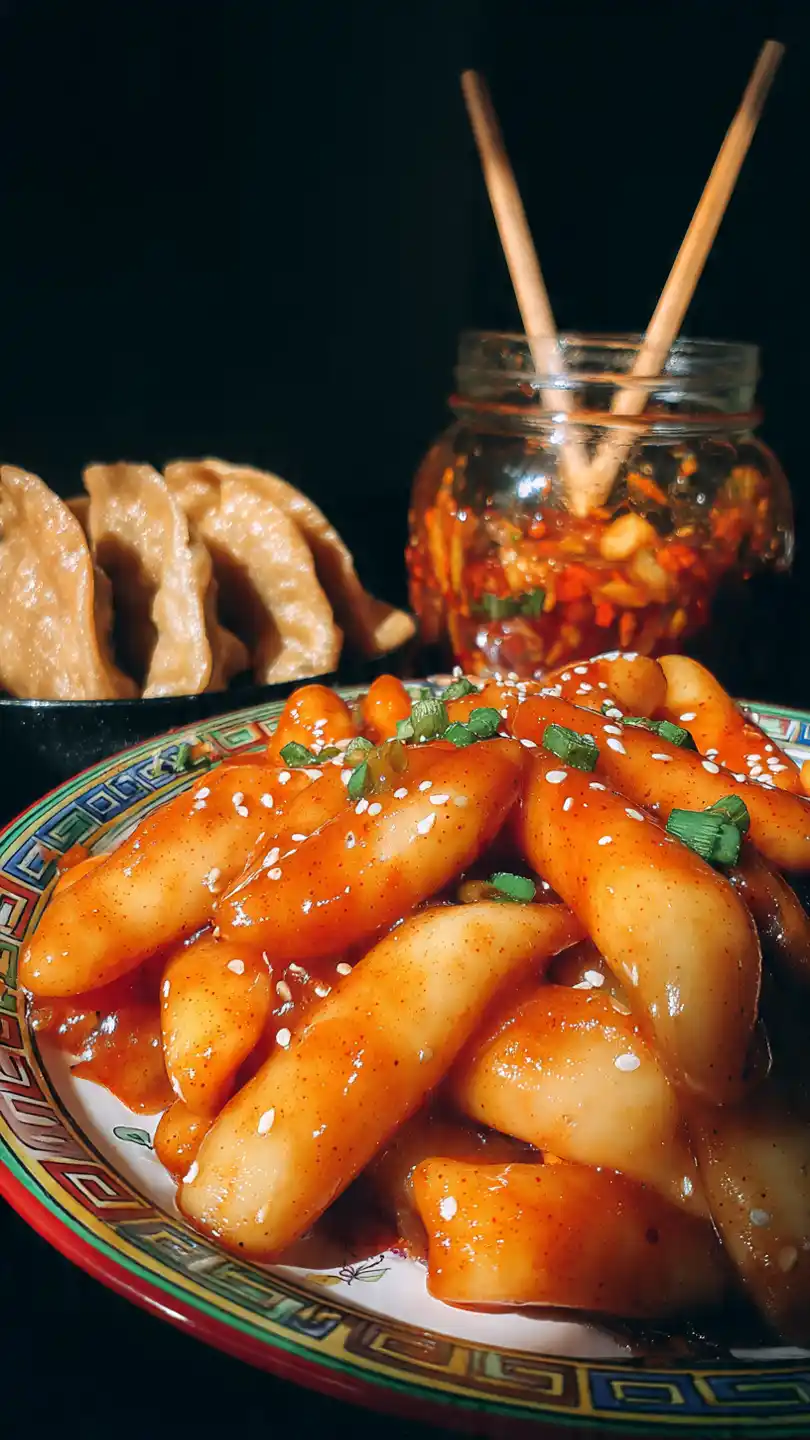
Tteokbokki is a hearty and satisfying dish all on its own.
- Hard-Boiled Eggs: A classic addition that is perfect for mashing into the rich, spicy sauce.
- Toasted Sesame Seeds: A sprinkle of toasted sesame seeds over the top adds a nutty aroma and a nice visual contrast.
- Fried Dumplings (Mandu): In Korea, it’s common to serve tteokbokki with a side of crispy fried dumplings for dipping into the extra sauce.
Storage & Reheating Tips
Tteokbokki is best enjoyed immediately, as the rice cakes can harden upon cooling.
- Storage: Store any leftovers in an airtight container in the refrigerator for up to 2 days.
- Reheating: To reheat, place the leftovers in a small pan with a splash of water or broth over medium-low heat. Stir gently until the sauce is loosened and the rice cakes have softened and heated through. Avoid the microwave, as it can make the rice cakes tough.
Common Mistakes & Fixes
| Mistake | Fix |
|---|---|
| My rice cakes are hard and tough. | You either didn’t soak them long enough before cooking, or you didn’t simmer them long enough in the sauce. If they are still hard while cooking, add a little more water to the pan and continue to simmer until they are soft and chewy. |
| The sauce is too thin. | Just keep simmering! The sauce will naturally thicken as the liquid reduces and the starches from the rice cakes are released. Be patient and continue to stir. |
| The flavor is too spicy. | Next time, start with less gochujang and gochugaru. To fix a batch that is too spicy now, you can stir in an extra tablespoon of sugar or top it with a generous amount of melted mozzarella cheese, which helps to mellow the heat. |
| My rice cakes are sticking to the pan. | This is very common. As the sauce thickens, the rice cakes have a tendency to stick. It’s important to stir them gently but frequently throughout the simmering process. |
FAQs
Do I have to make the anchovy broth?
While using plain water is perfectly fine and will still result in a delicious tteokbokki, making the simple 10-minute anchovy and kelp broth adds a significant layer of savory umami that is characteristic of authentic Korean cooking.
It’s a highly recommended step if you can find the ingredients.
Can I add other vegetables or proteins?
Yes, tteokbokki is very versatile. You can add sliced mushrooms, onions, or cabbage to the sauce along with the fish cakes.
Adding some cooked sausage or even leftover bulgogi are also popular and delicious variations.
Where do I find Korean rice cakes and fish cakes?
You will need to visit a Korean or a large, well-stocked Asian grocery store. The cylindrical rice cakes (garae-tteok) are usually found in the refrigerated aisle near the tofu and noodles, or in the freezer section.
The fish cakes (eomuk) are also found in the refrigerated or freezer sections.
Enjoy This Iconic Korean Street Food!
You are now ready to make one of Korea’s most beloved comfort foods right in your own kitchen.
This Korean rice cake recipe for tteokbokki is a perfect introduction to the bold, addictive flavors of Korean cooking. I hope you love the chewy texture and the incredible spicy-sweet sauce.
Enjoy!